SCO

Last night, Jenny and I had a big night out. We’re both homebodies, and when you play music for a living, it’s nearly work to go out and hear someone else play.  

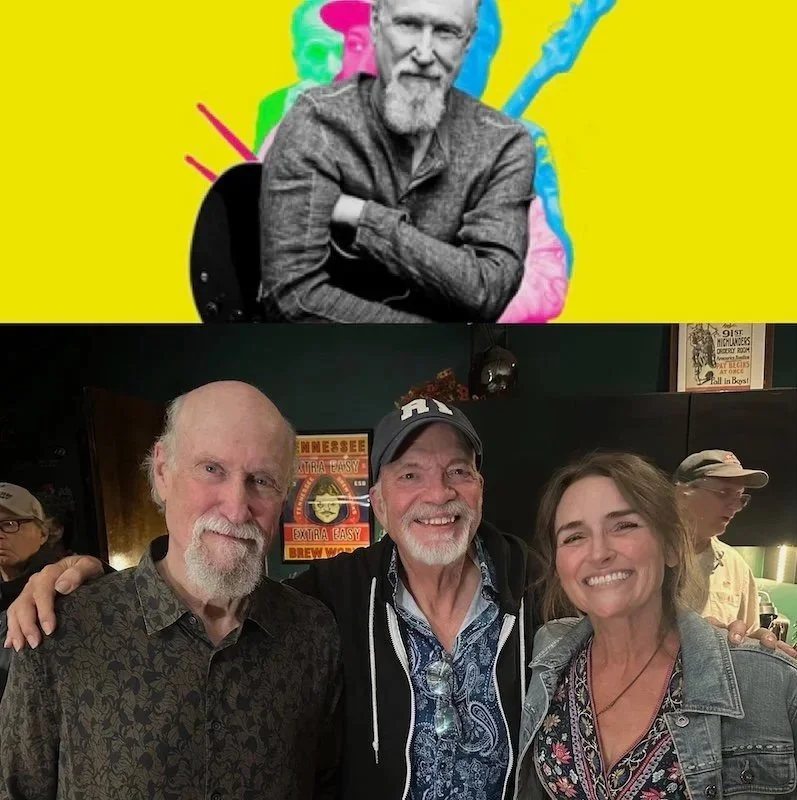
There are exceptions. When it’s John Scofield, it’s worth the ticket price, worth the food, drink, and tips, and worth the cost of a Lyft downtown.

Before I say anything else, I want to encourage those reading to find out if John’s “Electrospective” tour is coming to your town this fall.  If it is, buy tickets, and plan on a fantastic evening.

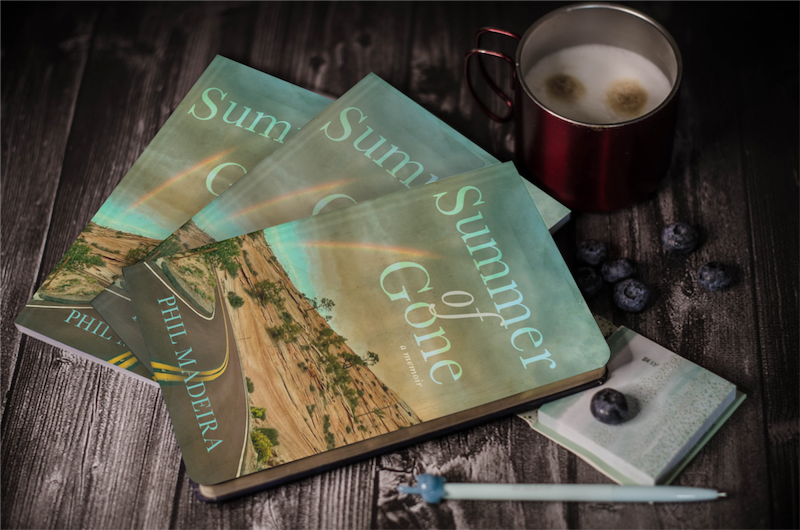
Since the folks who’ve released my new book Summer of Gone are encouraging me to blog and blab about it, I’m going to use their PR appetite as a means to shine a light on Sco.

How we met 20 years ago and became friends is something I talk about in the book; in fact, early on in the story, John and his wife / manager Susan make a significant appearance, and they’re among the kind friends who weave in and out of the heavy, difficult, and eventually healing story.

I have been a fan of John’s since the release of his record “Electric Outlet”, a funky set of tunes performed by him on bass and guitars with drumming icon Steve Jordan.  It was my love of Jordan’s playing that caused me to take a listen, and I’ve been hooked ever since.  

Back then, in the early 80s, I couldn’t have foreseen breaking bread with the guy whose playing I held in such high esteem, but here we are.  Again, those details are found in the book, along with a host of other amazing musicians whose names I couldn’t resist dropping — as long as those names somehow fit into the narrative.

Last night at City Winery in Nashville, Jenny and I had amazing seats, close enough to see the broad smile on John’s face as he interacted with as fine an ensemble as I’ve seen him with — and I’ve seen him in fine company many times!

Larry Goldings, arguably my favorite Hammond organ player, was on all manner of keyboards.  Jenny was excited to meet him because of her suspicion that he is the man behind the mysterious oddball Johnny “Bowtie” Barstow.  In fact, she had the opportunity after the show to ask him straight up if he and “Bowtie” are one in the same.  We couldn’t get a straight answer, but Jenny remains convinced.

Oteil Burbridge was on a six-string electric bass, and to be honest, if the bassist isn’t playing upright bass, I want to see an old school Fender four-string bass. But what can I say?  Oteil was astoundingly brilliant — barefoot and smiling like the Buddha. 

Initially, I had been slightly disappointed to find that one of John’s mainstay drummers, Bill Stewart, wouldn’t be joining in on this tour. It’s hard to imagine anyone filling those stylish shoes, but Adam Deitch, the kid in the band, was absolutely mind-blowing. Jenny and I both remarked that my drummer brother Bryan Owings should have been there to listen.  The grooves were insane. 

Sco and Co ran through selections from decades of his electric-leaning albums, including an old favorite from the “Electric Outlet” project, “Best Western”.  The band was enjoying each other, prodding each other to dig deeper and fly further.  

Jenny was beside herself, nearly giddy, infected by the groove and mesmerized by the virtuosity.  

Midway through a spectacular set, John remarked that it was always intimidating to play Nashville with so many guitarists in attendance; he quipped that he’d been learning a lot from Music City guitar players on YouTube. 

One of those guitarists was my old friend Phil Keaggy, in attendance with a drummer friend.  Back in 1989 or so, when Keaggy had moved to Nashville from LA, I had made the drive with him in a Dodge van containing whatever belongings his family hadn’t been able to get onto the moving truck. Before last night’s performance, I reminded PK that I had brought the “Electric Outlet” CD with me for the trip, and it was on repeat for quite a few of the 2,000 miles.  

It felt like a full circle moment for Phil and Phil.

We all have our musical heroes.  We buy everything they release, and we catch them “live” when they come to town.  We hope they’re as likeable as their music, but it’s unlikely that we’ll ever know.  

In the department of personhood, John’s kindness shines through, whether on stage or off.  He’s just a nice guy.  I don’t know why this surprises me, except that I must have some subconscious theory that says a musician who is devoted to virtuosity probably doesn’t have time to learn how to be a mensch.  Well, that’s simply not the case as regards the band I saw last night.

I’ll land the plane by saying that I’m grateful for friendships, and John’s friendship is no exception.   His music, his band, and the Electrospective tour is, however, exceptional!  Check it out, my friends!

Thanks again, Sco!
Phil Madeira
More Miles

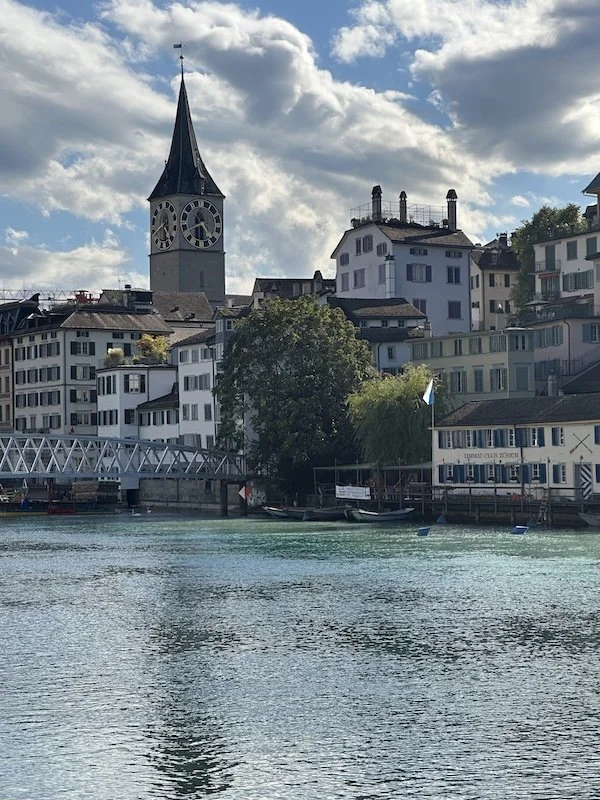
I’m sitting in my hotel room in Zürich, the most high-tech hotel I’ve been in all my travels.  The closets and minibar are designed to look like bank vaults, and I get the joke, although I’m not sure the Swiss intended it as a joke.  It’s pricey here!  I’m glad for a nice place to rest, after a haphazard route from Stockholm to Denmark to the UK; it’s been one manic mile after another.

Today, we’re all catching our breath.

Bryan Owings and I took the tram down to the central station yesterday, and enjoyed walking around the Old City, taking in the beautiful buildings, clock towers, and spires. It’s Gig #6 in Emmylou’s Farewell Tour of Europe. I guess it’s her last rodeo over here, and I’m glad to be a part of the shindig; I’ve been in her Red Dirt Boys for 18 years.

“Farewell” is a word I interpret as “Hello”- what’s next? It’s exciting to me. I love the road, and I love being home. As long as I’m with my people, I’m basically good, even with bad routing.

While here, I’ve been tidying up “More Miles”, the companion record to “The Millionth Mile”, which comes out September 18.  I don’t know when “More Miles” will officially release yet, but it’s coming.

There are many ways one can measure a lifespan. Years, wealth, health, wounds, victories. But with two albums with the word “MILE” in their titles, and a book whose title Summer of Gone infers distance, I suppose one could measure my life in miles.

Summer of Gone reads like a travelogue, and on this tour, which ironically started in Oslo the day the book released, I’ve been reminded of chapters that take place in some of the cities we’re playing in.  Especially in Oslo and Stockholm, cities that represent family bonding times with my daughters, and overseas friendships that have remained vital for years, and never so much as in my summer of gone.

We landed in Oslo on the 19th of August, and enjoyed a free day on the 20th, just enough time to visit with two of the Humming People, the Norwegian band I’ve worked with over the years. The night of our second show, I gathered with all 4 of the band for dinner before the concert.  It was the first time all of us had been in the same room since 2017, when Kate and Maddy and I had visited.

That visit of a decade ago had been bittersweet, while this time had been joyous; all 5 of us had been through some serious life changes, and I wasn’t the only one who had been visited by sorrow. But as we dined close to the Oslo harbor, we were all in places of peace and gratitude.

I parted with Humming People, warmed by the possibility of making more music together.

The day before Emmylou’s Stockholm gig, Bryan and I popped into Sven Hellten’s famed Hellstone Music, one of the greatest vintage instrument stores in the world. I had been there with Kate and Maddy over a decade ago, where we visited with drummer and dear friend Brady Blade.

This time, it was Bryan and me, with Emmylou’s grandchild Amarylus and our crew chief Maple Byrne, picking old guitars and swooning over rare vintage drums, including a snare drum once owned by Spike Jones.

The morning of the show, Bryan and I took the tram to gamla Stan (Old Stockholm), and picked up some souvenirs, including a Swedish flag that I waved later when we took our final bow.

Gamla Stan is yet another place that holds memories of my travels with my daughters.

Walking around, I couldn’t help but think of our Scandinavian trip in 2017, when we stayed with our friends the Forsbergs for a few nights, and when we traveled from Stockholm to Gotland, a Swedish Island in the Baltic Sea. If you read Summer of Gone, you’ll find us in Visby, the medieval town in Gotland.  In our odd little hotel room at the Hotel Visby, you’ll share my sense of foreboding as I reckon with the cold front coming from a love gone wrong in Nashville. But, you’ll simultaneously find me exulting in the work of recording “Providence”, as musicians send their remotely recorded parts to me.

That’s the thing about the miles we travel; we’ll trip on a few roots, but we’ll also be overwhelmed by the fragrance of honeysuckle at the same time. Summer of Gone isn’t just about how dark my forest seemed in those days; it’s also about the rays of light and joy breaking through the heavy branches; it celebrates the beauty of Story.

We have miles to go before we head home, but from this point on, there’s no retracing of the steps in Summer of Gone.  We’ll be in Brussels tomorrow, followed by shows in Antwerp and Manheim, and then a hard day of travel back to Nashville.

From here on out, the triggered memories will be little things.

For instance, when I’m in Brussels, I might try to find the cafe where I had a proper paella, surprised at how much better the Spanish dish was in Belgium than when I tried it in Barcelona in 2005 with Buddy Miller.  Or, the gig in Bruges where one of our temporary sound crew didn’t want the band to partake in the crew lunch, and became enraged to the point of nearly coming to blows with our fiddle player. Why the mind contains ephemera like this, I’ll never know, especially when it sometimes lets go of things that matter.

No one wants to revisit their sorrows, but we need them.  We need the contrast between light and dark in order to truly count our blessings.

Anyway, that’s my postcard from Mercyland, or should I say, Zürich. Today, may you see a landmark in your journey that brings you a worthwhile memory.

Phil Madeira
Writing Matters

When it comes to school days, I was a big disappointment to my parents. At times, they were elated if I got a C minus.  Science and math couldn’t overwhelm the stories and dreams in my head.

I had two older siblings who routinely got straight A’s.  On the first day of school, a teacher would take note of my name and say, “Are you Ann-Elise’s brother?” or “Are you David’s brother?”  When I replied affirmatively, they would always say how much they were looking forward to having me in their class.  One would have thought that my reputation as being less than my siblings would have preceded me, but I guess hope springs eternal. The moment the connection was made, I knew I was going to let yet another teacher down.

Music, Art, and English were interesting to me, in that order.  When, as an eighth grader,  I brought an A+ home in English, my parents were clued in that they weren’t mistaken to have high expectations.  I had unwittingly raised the bar for myself by performing well.  The fact is and was, I’m good with words.  Words have gotten me out of as much trouble as they’ve gotten me into.  Words have given me a moment of comedy to melt the heart of a parent or teacher who is ready to punish me.

Words, color, sounds—these are the things in my toolbox. I see creativity as a natural part of who I am, and whether I’m writing, painting, or composing.  I’m doing it because it’s what I do.  Just like breathing, but more interesting.

I think my folks would be surprised that the son who so disappointed them as a student has made a living by doing what comes naturally.  My mom was still living when my first book God on the Rocks: Distilling Religion, Savoring Faith was published in 2013.  I didn’t tell her about the book, because I didn’t think she’d be capable of enjoying how I wrote about her.  She’s the favorite character of most people who’ve read the book, but I’m not sure she would have found humor in the funny things I wrote about her.

She might have liked my new book Summer of Gone better, although some of my lifestyle choices would have presented a challenge; and I would have heard about it.  I feel confident that in reading this new book, my mother would have had some empathy for what her son went through within its pages.

I’ve long believed and stated that trauma is behind every great book, song, painting, or whatever masterpiece one would like to discuss.  I think of my album “Bliss”, all love songs, and know that it was inspired by the love I’ve received in the last few years, but behind it all is the reality and contrast of what life is like when it’s not bequeathing sweetness.

And there’s the catch.  Trauma, loss, heartache, and conflict can be gifts if we allow them to be. When I’ve experienced any of these things, I usually grab a guitar and write a song.

In the case of Summer of Gone, my  initial response / reaction to the story I was living in before I wrote it was to reach for the guitar or piano.  I tried to write prose, but the raw prose wasn’t worthy of anyone’s witness; the wounds were too unpleasant to look at, not yet healing.  The songs, particularly on an album called “Hornet’s Nest”, got me through.  A good groove and some badass musicianship were the offset to the sting of the lyrics.  Writing those tunes mattered; if I wasn’t allowed to tell my tale, at least I could let it morph into a song cycle.

The same love and kindness that inspired my album “Bliss” gave me the will to write Summer of Gone out of gratitude for the blessings of life, blessings that were in play simultaneous to the story of cancer and loss that I was experiencing in 2017,  I hope readers feel the ray of kindness that I tried to illuminate my story with.

If you’ve read this far, I want to invite you to pick up a copy of Summer of Gone.  You can do it here on my website (and I’ll sign it) or find it wherever books are sold.  It releases Tuesday, August 18 on all literature sites.  Let me know how you like it, and if you acquire it from a site that allows for reader reviews, please post a review, assuming you got something out of it.

Writing matters.  So does reading and listening.  Listen to your hurts and your dreams.  Pick up a pen and write about them.  You may find yourself being called an author.

Phil Madeira
CROSSING BORDERS

The last several weeks have been a whirlwind between Ireland, Santa Cruz, and Nashville.

BUT—

Before I even get to that, if you haven’t already supported the new project I’m kickstarting, we have less than two days left to reach our goal. 

Here is the link.

I left for Ireland in early April, and left 2 weeks ago this morning. My mate Sammy Horner and I hosted my Mercyland Songwriting Workshop for the fourth time in the little town of Gorey, and this year, I made sure I had a few days to shake off the jet lag before diving into the rewarding and hard work of mentoring songwriters.

Each year, the town officials welcome all the attendees with a reception, replete with little girls performing Irish dances, Celtic harpists, and speeches from Gorey representatives, followed by a word from myself and Sammy.

These days, when traveling across the pond, I know that many whom we encounter in other lands are wondering what is becoming of America. The face of our country as they knew it has changed. Not to mention how our governmental decisions are affecting gas prices and availability. I get asked a lot of questions, like “Are you okay?” and “Are you safe?”.

In my word to the citizens of Gorey, I made a brief acknowledgment of the worry that I encounter when crossing borders. I said I perceived the welcome we Americans received as a token of hope for our people, that a change for the better will occur sooner than later.

I made clear that I was speaking for myself, because I couldn’t be certain that every American in the workshop shared my feelings, and I wanted to be respectful of them.

I’m trying to learn to move in and with grace, not something I’ve always concerned with.  My workshop is called “Mercyland”, and that alone is a reminder to give grace when possible.

One of our Ireland attendees has come for four straight years, which tells me that I’m doing something right, something beyond my songwriting expertise. He and one of the Irish attendees have, in the past, battled out their political differences online in the public arena. At the commencement of our annual workshop, I worry a little, hoping that their disagreements will not surface at the workshop.

This year, no grievances were aired, for which I was grateful.  Each of them was kind to the other, perhaps remembering that they are “Mercylanders”, and have a name to live up to. A name that includes the word “Mercy” shouldn’t be that hard to figure out. “Christian” is a similar word, isn’t it? A name that includes the word “Christ” seems to beg for a certain essence from whoever takes on the name. But these days, “Christian” is a word that many are uncertain of, in terms of what to expect. Is the person identifying as such a person of goodwill? A nationalist? Prejudiced?

When my sweetheart Jenny and I first met, the word “Christian” came up, and it gave her pause, because most of the “Christians” she knows have far more interest in expressions of division, exclusion, and self-interest than in the words of The Beatitudes.

There are borders all over the place, boundaries that we sometimes can’t perceive unless we trip over them in conversation. We never know how a simple remark can trigger outrage and the termination of a conversation or even a relationship. Times are tricky, aren’t they?

Maybe, like me, you’re trying to find the merciful path, a path that doesn’t avoid the truth, yet still hopes for a bridge to meet on.

Phil Madeira